Saturday, 30 June 2018

How to enable the iOS 12 thesaurus

How to enable the iOS 12 thesaurus

Open Settings.

Press General.

Scroll down to Dictionary. Press it.

Select “American English: Oxford American Writer’s Thesaurus.”


Using the thesaurus


To use it, open a document in the word-processing or note-taking app of your choice, be it Pages, Google Docs, Ulysses, iA Writer, or many others. After that, find the word you’d like to change and select it.


You should see a “Look Up” option in the menu that pops up. (Its position will likely change depending on which app you’re using.) Press it.


You’ll see the dictionary options you have active from the previous steps at the top of the new screen that appears. The top listing will likely be the dictionary; the second will likely be the thesaurus. Click on the listing that says “Oxford American Writer’s Thesaurus” along the bottom.


And voilà. You’ll see a list of related words (that you may or may not believe are better). Unfortunately, you can’t simply plug in the new word by selecting it from the list; you’ll have to remember it and enter it into the document yourself.


Sponsor Ads:
Gihosoft iPhone Data Recovery is a professional iPhone Data Recovery software to get back all your lost text message, photo, video, call history, note, contact and more from iPhone/iPad/iPod Touch. It offers a full solution to recover your lost data in different tough situations. Besides recovering data directly from iPhone, iPad and iPod touch, it also allows you to recover data from iCloud and iTunes backup files.

Apple will reboot Maps using its own data, starting in iOS 12

Popular books, hit films and TV series, characters from graphic novels, and even toys can all be translated into the digital space, allowing fans to immerse themselves in their favorite fictional worlds — and adding new income streams and brand extensions for the intellectual property (IP) holder. This increases the possibility of bringing in whole new audiences, or just maintaining engagement with their existing ones.


If you own this kind of IP, then allowing someone to create a game based around it can certainly deliver financial results — at least in the short-term. This can be true from the biggest blockbuster to the smallest mobile game.


At first glance, licensing your brand’s IP rights to digital games companies seems like a no-brainer. But it’s not always in the best interests of the long-term longevity and financial health of your IP, and it certainly doesn’t tend to deliver the most creative results or even, arguably, the best gameplay, meaning it’s an approach which can backfire if you let down your loyal audience. Nothing is worse than a fan who falls out of love with your characters and the universe they inhabit.


So as a brand owner, you need put care into who you work with and how you manage any relationship. Money must never be the overriding objective. The relationship with the audience is what’s paramount. As a brand owner, you should juggle delivering a healthy return with maintaining that strong bond between a property and its fans.


The danger of care


One particular danger is that major brand IP owners are restricting innovation in computer and mobile games based on their properties either by being overly cautious or by chasing profits above all else. Many IP owners have a habit of working with the biggest computer games publishers, who have a track record of delivering mass selling titles, and who also have the cash to pay major up-front licensing fees.


This is understandable. After all, creating a triple-A game (in theory, the level that should bring the most success) – takes at least an estimated $100 million investment in development costs and marketing.


Big game publishers can afford to pay big licensing fees; but their very size, and the size of the sums they have to invest, can make them cautious, which in turn puts a damper on creativity. Behemoth games companies aren’t motivated to risk anything or innovate, because of the large financial commitments they have to make. This creates massive pressure to deliver revenues with minimal additional investment.


The safest route to do that, when licensing existing IP, is to leverage existing game engines and assets to launch games and begin generating cash as soon as possible. It becomes a self-perpetuating cycle. Unfortunately, risk-averse behaviour from both IP owners and big game publishers means boring games, which leads to long-term damage.


Unleashing creativity


Ideally, as an IP owner, you should be looking to work with games developers and publishers to create authentic and enjoyable digital versions of your characters and worlds. Fans should see computer, console, and mobile games as enhancing what exists in other media, not damaging it.


One way to do this is by ensuring that games that are launched are as creative as possible, in terms of visuals and gameplay (obviously, remaining true to the original IP, of course).


IP owners should try to find a way to work with smaller, more agile, and more creative games producers. They might get less money in the short term, but in the long term, they are more likely to end up with a fan-pleasing hit on their hands that truly complements their IP. If they get the fans, then the revenue stream should last for much longer.


Above: A simple loot crate reward.


Image Credit: GamesBeat


Experience suggests that if you license your IP to a single “major player” games developer, you run the risk of being almost completely cut out of the development process. It can boil down to a conference call a month, if you’re lucky! That can lead to some very disappointing games hitting the market and potentially damaging IP brand values. (Just ask Disney.)


Working with one or more smaller developers will certainly involve more management time and resources on the part of the IP owner – but that’s not necessarily a bad thing. Working with smaller developers, for example, can mean IP owners taking on more of the responsibility (and arguably the risk) for marketing and distribution, which a big publisher would usually handle. That risk has to be balanced against the potential gains in terms of creative freedom and even IP protection.


Who’s doing it right?


One example of how an IP owner can work with a range of publishers, rather than putting all its eggs into one basket, is UK company Games Workshop, now best known for its Warhammer fantasy and science fiction universes and related figures and tabletop games. It has been licensing its creative IP for decades, with mixed success; in the last few years, however, it seems to have hit on a winning formula.


Swedish developer Fatshark has just released Vermintide 2, based on the latest version of the Warhammer Fantasy RPG and table-top wargames universe (the Age of Sigmar) to great success. It’s the sequel to the 2015 licensed game, Warhammer: End Times – Vermintide, which itself sold more than 500,000 units.


What’s interesting here is that Games Workshop maintained extremely close links with the development team throughout – to the extent that new concepts from the computer game have now been integrated into the original tabletop version.


But Games Workshop has also been working with other developers and publishers. These include Bigben and NeocoreGames, for a space role-playing game, Warhammer 40,000: Inquisitor – Martyr, and Sega and Creative Assembly, for Total War: Warhammer. A portfolio of different titles from different developers illustrates how Games Workshop is actively looking to work with a number of companies to exploit its IP in the gaming space.


Another example would be Marvel, with its hugely valuable portfolio of comic book characters, films and related licensed products. They have worked with many different developers/publishers over the last decade. Looking at the latest figures for top grossing IOS games ranked by daily revenue, the best-performing game app in April 2018 was Marvel: Contest of Champions, a free to play game built by Kabam under license from Marvel and first launched back in Dec 2014.


Kabam is a smaller studio which built on the success of its previous hit game, “Injustice: Gods Among Us”, and also took learnings from its other games, improving the economy design and multiplayer, and ensuring that events were strongly tied to its core. So it learnt from previous games, but changed some fundamentals in the game design like what happens in the meta outside of the battles. The meta for all games is what drives long term retention and strong monetization. This paid off for Kabam. They focused on creating a pure Gacha system (gacha games give out randomized rewards in exchange for some form of in-game currency). As a result, Kabam and Marvel have a top performing game.


We at IRM decided to work with best-of-breed developers on different game genres with Who Wants To Be A Millionaire. We opted to take a risk with the developers and preferred for them to focus their resource on innovative and bespoke game design for our brand and our audience, rather than sizable upfront fee commitments. We replicated this strategy when working with the Agatha Christie estate; selecting smaller development studios with passion for the brand and a focus on creating unique experiences for different audiences. This is is why many of our branded games have won awards voted by the players themselves.


Sponsor Ads:

Gihosoft iPhone Data Recovery is a professional iPhone Data Recovery software to get back all your lost text message, photo, video, call history, note, contact and more from iPhone/iPad/iPod Touch. It offers a full solution to recover your lost data in different tough situations. Besides recovering data directly from iPhone, iPad and iPod touch, it also allows you to recover data from iCloud and iTunes backup files.


IP owners don’t have to avoid risk all the time – and nor should major publishers. Yes, IP owners must protect their property; but launching mediocre products alienates fans who may never return.


Megan Goodwin is joint Managing Director of IRM. A content innovator and digital media entrepreneur, she brings more than 15 years’ experience in television, publishing and digital media specialising in the creation of great digital products and pioneering new business models.

Saturday, 16 June 2018

How do I get a preferred update (iOS 10) on an iPhone 5S rather than the latest version?

In general? You don’t. Once Apple releases the latest version, they stop signing the older versions, which makes it impossible for you to downgrade to the older versions without significant effort and skill. This is done to ensure that the majority of the user base is running the most secure versions of the operating system, which makes iOS devices much harder to attack.
Speaking strictly in qualitative terms, using iOS 11 on an iPhone 5S doesn't feel bad. You notice the impact of background tasks more than you used to—updating apps or downloading a bunch of music in the background makes the whole phone feel sluggish. But taking pictures, sending e-mails, and scrolling through apps is still more than responsive enough to be usable, and I rarely find myself wanting to throw the 5S through the nearest wall like I did with the 4S a couple of years ago. Compare the load times for some of the apps above to the load times for the same apps on the iPhone 5 or iPhone 4Sunder iOS 10 or iOS 9. The 5S is still significantly faster, even with iOS 11.
So there’s not much of a good reason to avoid running iOS 11 on the iPhone 5S, because there are many security vulnerabilities that have been fixed in iOS 11 that are absent in iOS 10.
Gihosoft iPhone Data Recovery is a professional iPhone Data Recovery software to get back all your lost text message, photo, video, call history, note, contact and more from iPhone/iPad/iPod Touch. It offers a full solution to recover your lost data in different tough situations. Besides recovering data directly from iPhone, iPad and iPod touch, it also allows you to recover data from iCloud and iTunes backup files.

18 iPhone Tips That'll Make You Seem Like A Phone Wizard

Getty
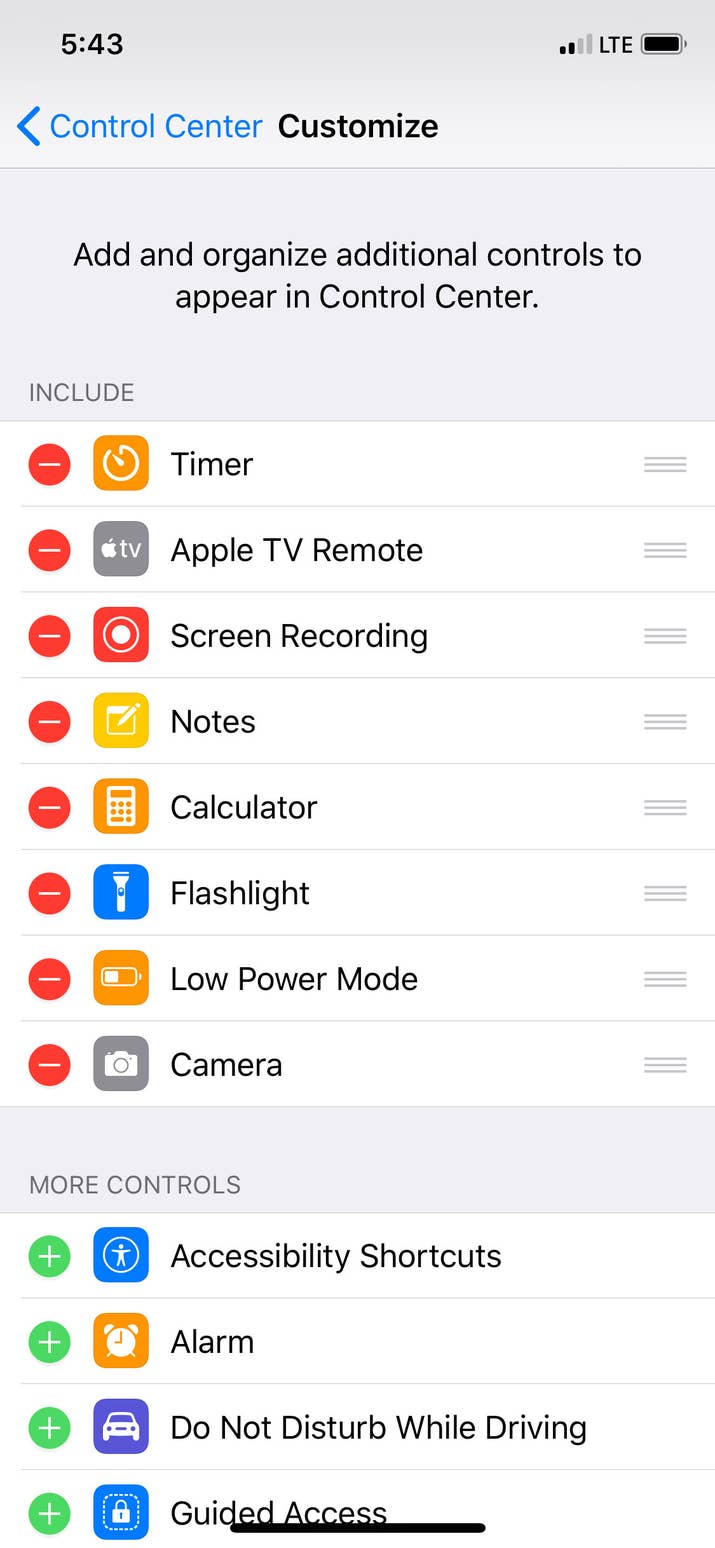
1.Completely customize your control center:
BuzzFeed
This one's easy, go into "settings," next, tap "control center," and tap "customize controls." Finally, select whichever features you want to add to your control center by tapping the green "+" icon.

*Make sure you include screen recording so you can follow along with the next step.

2.Record your screen:
BuzzFeed
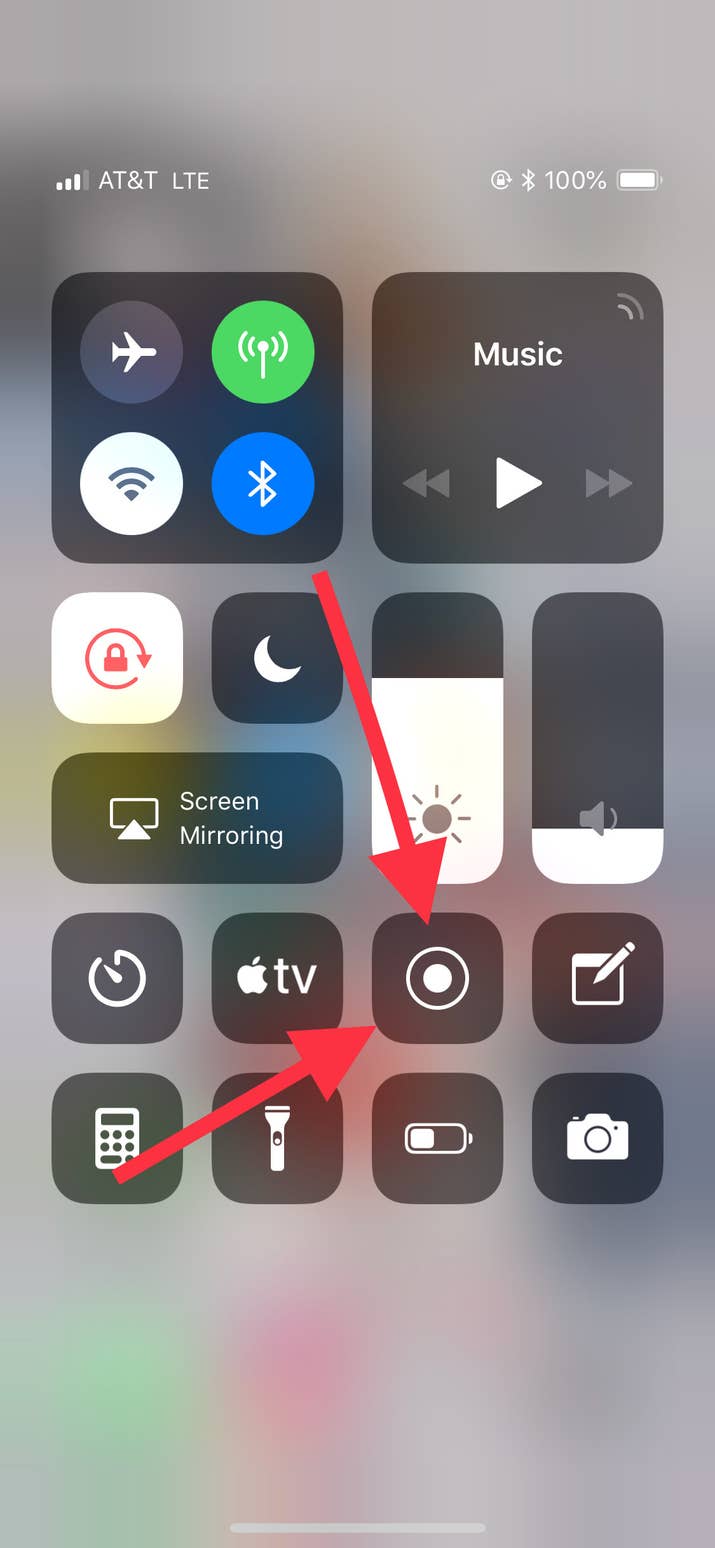
From the previous step, you added Screen Recording. Now, swipe down on the right side (if you have an iPhone X), or swipe up (if you have an iPhone 8 or later). You'll see a record button (the arrows are pointing to it), tap that and your screen will begin to record. You can record whatever you like, and when you're done, tap the red bar at the top.

3.Hide your "private" photos:
BuzzFeed
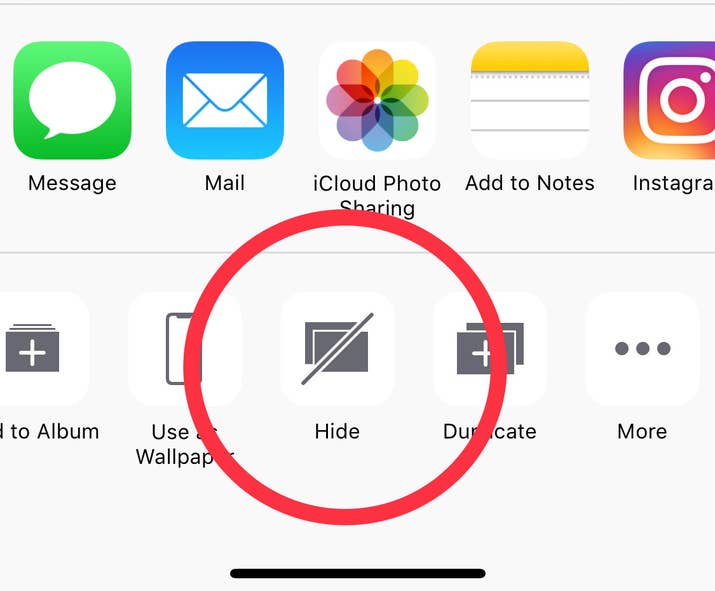
If you have sensitive pictures on your phone like "private" photos or even something as simple as bank account information and you don't want it to show up when you open your photos app try hiding them.

Open up your Photos app, next select the photo or video that you want to hide.

Then, tap hide (you may have to slide over a bit to see it), finally, confirm that you want to hide the photo or video.

Advertisement

4.You can close out three apps at once:
BuzzFeed
When you open the app switcher, use three fingers and drag up on the apps. It will close three at once.

5.Have Siri read your email out loud:
BuzzFeed
Activate Siri and say, "read me my emails" and the digital assistant will read them out loud to you. You can also do this for text messages by saying, "Siri, read me my messages."

6.Turn your keyboard into a trackpad:
If you press and hold anywhere on the keyboard it will turn into a trackpad so you can easily move around a big block of text.

7.Make custom vibrations for alerts:
BuzzFeed
To make a custom vibration, head into settings, next tap "Sounds & Haptics." Once you're in there select the "sound and vibration patterns" you want to change. For this example, we'll go with "ringtone." At the top you'll see "vibration."

Towards the bottom you'll see under "custom" the "create new vibration" option, follow the on screen instructions and you can create a vibration pattern of your choosing.

8.Use words and letters to make your password instead of numbers:
BuzzFeed
This one's pretty simple, a stronger password is one with numbers and letters. So if you want your phone to be even more secure go into settings and then select "Passcode."

You'll have to enter your current passcode and then when you go to change it, the second screen will come up. From there choose "create alphanumeric code," and come up with whatever combination you like.

9.If you make a mistake remember you can "shake to undo" as a way to backspace:
Just shake your phone from almost any screen and you can undo.

10.Use the built-in compass as a level to make sure things are hanging straight:
BuzzFeed
Open the compass app, and swipe to the left. A new screen will pop up and it's a level. What's great about it is that the screen turns green when something is level.

11.Use the built-in clock to go to bed on time
BuzzFeed
Go into the clock app. Select "Bedtime" at the bottom. Set how many hours you want to sleep each night and the app will tell you what time to go to bed and will wake you up. It can also give you an analysis of your sleep quality. Cool!

12.Have your flashlight go off when you get an alert:
This one's pretty cool. If you want your phone's flash you light up when you get an alert do this. Start by going into "settings," then go into "accessibility," after that scroll down to the "hearing" category. Once you're there switch on, "LED Flash for Alerts." Your phone will now flash when you get a message, phone call, or other alert.

13.You can ask Siri what planes are flying above you right now:
BuzzFeed
Simply say, "Hey Siri what plans are flying above me right now?"

14.Use your phone to set reminders when you arrive or leave a specific location:
BuzzFeed
Open the reminders app. Tap the "+" sign and write out your reminder. Once you're done, tap the "i" next to your reminder. Select "Remind me at a location" and then tap the "location" option that shows up. It will allow you to enter an address and then you can choose "when I arrive" or "when I leave" and you can set a reminder for a particular place.

15.You probably already know this one, but if you push the volume button it will snap a photo:
Pretty simple, but you can use the volume button to snap a photo if your hand can't reach the actual shutter on the screen.
Gihosoft iPhone Data Recovery is a professional iPhone Data Recovery software to get back all your lost text message, photo, video, call history, note, contact and more from iPhone/iPad/iPod Touch. It offers a full solution to recover your lost data in different tough situations. Besides recovering data directly from iPhone, iPad and iPod touch, it also allows you to recover data from iCloud and iTunes backup files.

16.Use the camera as a magnifying glass:
For this one start out in settings. Next choose "general." Once inside that menu, select "accessibility." Select "magnifier," and switch it on.

If you have an iPhone X to activate it click the side button three times. If you have an iPhone 8 or later, you can triple click the home button. You can then zoom in on anything and use the screen to see it easier.

17.If you have an iPhone X you can swipe at the bottom of the screen to switch between apps:
BuzzFeed
Easily switch between apps on the iPhone X by taking your finger and sliding it across the bottom corner. This makes it easy to get back to what you were doing in a different app.

18.And finally, record in 4K video:
BuzzFeed
Your phone by default doesn't record in 4K, but it has the capability to. Every phone after the iPhone 6S can record in 4K.

To turn it on start by going into settings. Next, scroll down and go to "Camera," once inside the camera settings, tap on record video and select 4K and whichever frame rate you want.

Remember that 4K takes up a lot of space and battery so use it with discretion.

Apple prepares "Dark Theme" on iOS 11

 Apple prepares "Dark Theme" on iOS 11

Since a long time ago, a darker version of iOS is considered, this is because the white background in the system often ends up not appealing to a large part of the public of Apple devices, which have a greater sensitivity in the eyes. A feature recently released on one of the iOS 11 Betas reshapes the color inversion process, which has been around since Apple's version 7 system.

Smart Inversion on iOS 11


Smart inversion is nothing more than the old color inversion that everyone already knows, but with some Upgrades. The new feature reverses the background colors and system shortcuts, but it does not have the essential icons and features of the iOs to be affected, thus creating a dark theme for the apple OS.Must Read:iMyFone D-Back iPhone Data Recovery–Recover Deleted Data from Your iPhone/iTunes/iCloud Easily! https://www.imyfone.com/iphone-data-recovery/If you lost videos from iOS Camerall Roll which are nowhere to download again, you can use Gihosoft iPhone Data Recovery to get back deleted videos from iOS device including iPhone, iPad and iPod Touch.


Jihosoft iPhone Backup Extractor Extract and recover all types of data from iPhone backup files, such as camera roll photos, videos, SMS, contacts, reminders, WhatsApp, and etc.

Gihosoft Android data recovery Free is a super awesome software specialized in Android file recovery. With this program, you are able to recover deleted photos, music, videos, messages, contacts, call logs, WhatsApp messages, Viber chat history and more from Samsung, Huawei, LG, HTC, Motorola, Google, Oneplus, Sony, Lenovo, ZTE and other Android devices directly. Meanwhile, this Android data recovery software is available for both Windows and Mac platforms.


Smart Color Inversion - iOS 11


Although interesting, the novelty still presents some flaws, reversing colors that should not be inverse, but still it is a functionality to be interesting!

Not everything can be reversed


The feature, which is still in beta and should be released soon after the release of iPhone 8, is not yet compatible with the App Store applications. In other words, the dark theme only works effectively in native OS applications, applying the normal color inversion on downloaded Apps.

Google Announces Nest Wifi Router with Smart Speaker, Nest Mini, Affordable Pixelbook Go

Google Wifi was one of the first routers to offer mesh networking for homes. The company has launched a new Nest Wifi which comes with an in...